


Two Sides of the Same Coin
A collaborative art and community archive project that was inspired by the divide in Plymouth’s LGBTQIA+ and maritime communities, as well as Beryl Cook’s ‘Lockyer Street Tavern’ (1976). Two Sides of the Same Coin set out to build both a space and an archive that highlights the intersectionality of such a historically queer city. In 2023 the team collected local LGBTQIA+ stories about the spaces that they feel safe in the city to become the basis for the archive, allowing the public to later reflect on these stories before adding their own. This was to put LGBTQIA+ voices at the front of the archival process, while still opening it up to different members of the community to highlight the tangible existence these experiences have in shaping the city. This phase culminated in the creation of a ‘pub bar’ setting that was installed in the middle of the city centre, turning the high-street into a space of familiarity and community. Pre-recorded stories were visible as a part of the bar-top, and could also be listened to on a rotary-style telephone. These stories, as well as the setting and Cam’s paintings along one side of the bar acted as prompts to encourage the public to take part in the project and consider their own social spaces within the city. The has since been updated, featuring new artwork by Cam Williamson, and can be seen at Sappho's Cafe and Community Space in Bretonside, Plymouth, UK.

Bar Paintings
The paintings on the bar were inspired by Beryl Cook's paintings of pub settings and the early stories shared by Plymouth's queer community around their safe spaces. Acting alongside the collected written stories, and the verbal stories played through the telephone on the top of the bar, these paintings acted as prompts to members of the public to consider their own community spaces and the relationship they have with them.
Image Credit: PB Media
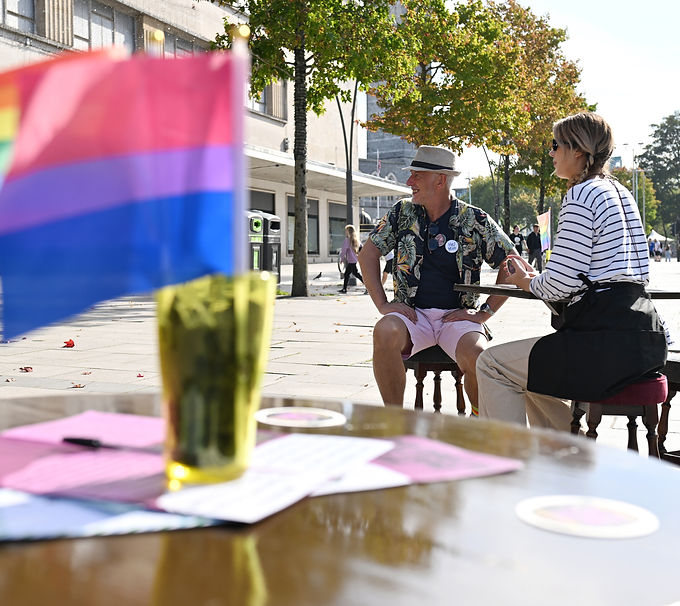
Armada Way Piazza
In October, 2023, Two Sides of the Same Coin spent a weekend in the centre of Plymouth's hughstreet. The team, which consisted of the three organisers and three hired facilitators (two of which are shown above), spoke with the public about their experiences in the city and encouraged those who were interested to add their stories to the archive. On each table was information about the project, disguised as. 'pub menu', beer mats and postcards for participants to write their stories, and various pride flags.
Image Credit: PB Media
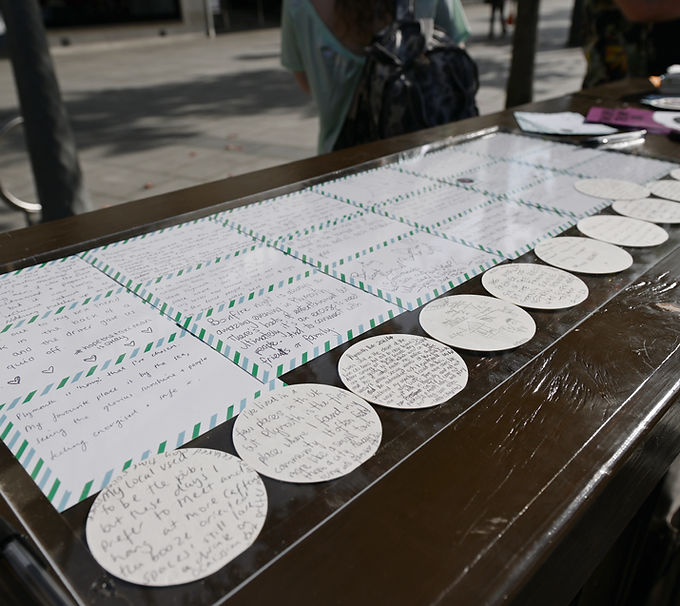
The archive
Slowly building from stories shared by members of Plymouth's community, which grew during an outing at Plymouth Marjon University, these hand written stories are a key part of the bar. By encouraging people to think about their own histories and allowing them to respond in an informal setting, the archive grew and changed, showcasing the diversity of experiences within the city.
Image Credit: PB Media
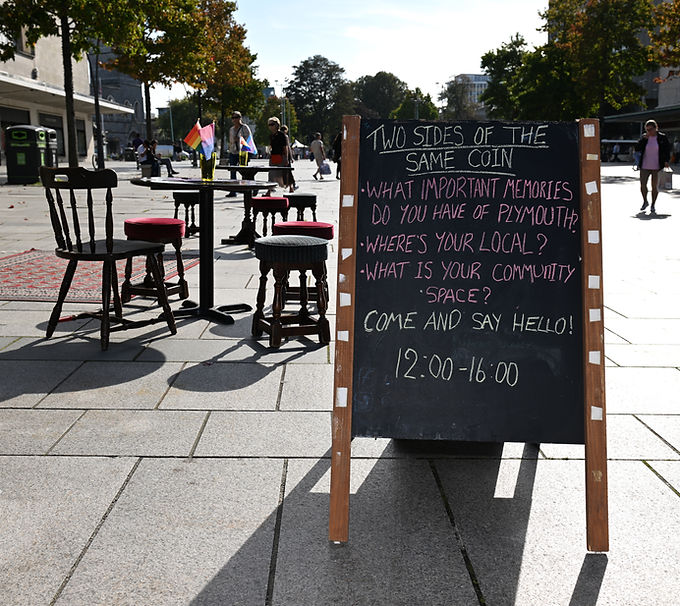
Pub Sign
The props on display created a comfortable and recognisable space for socialisation, jarringly displayed in the centre of Plymouth's high street. This sign, alongside chairs, stools tables, and of course the bar itself transformed the social relationship to the space. This then provided both intrigue and a comfortable setting for people to think about their own community spaces.
Image Credit: PB Media
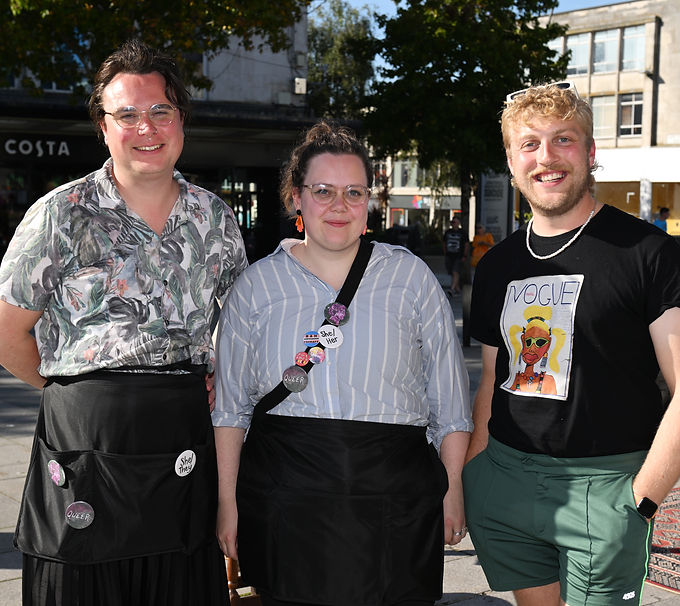
The Team
From left to right: Cam Williamson (Lead Artist), Polly Rayner-Woodrow (Lead Community Engagement), and Tim Norman (Lead Producer).
Image Credit: PB Media
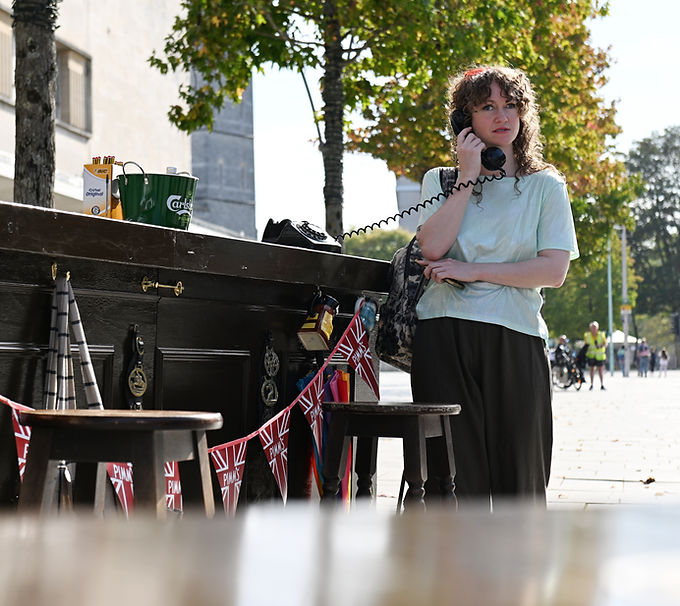
The Telephone
A top the bar was a rotary telephone that plays pre-recorded stories by members of Plymouth's queer community. Working alongside the growing hand written archive and the paintings on the bar, these stories give insight into queer experience within the city and act as an ice breaker for the public when considering the archive and the space provided.
Image Credit: PB Media
_edited.jpg)
Painting the Bar
A still from footage of Cam in the process of painting the bar.
Image Credit: Jess Jackson
All Videos
All Videos

